Motor Vehicle Accident Injury Care in Portland
Whiplash, back pain, and stiffness after a crash don't always show up right away, and they don't always resolve on their own. Physical therapy after a motor vehicle accident treats the soft tissue damage and movement changes an ER visit doesn't address.
What causes lingering pain after a car accident?
Even a low-speed collision can whip the neck and spine through a range of motion they were never meant to move through that fast. The damage is often to soft tissue, muscles, ligaments, and small joints, that doesn't show up on an X-ray but shows up in every stiff, painful movement for weeks afterward.

The rapid back-and-forth motion of a collision stretches and strains the muscles and ligaments of the neck beyond their normal range. The result is stiffness, pain, and sometimes headaches that can take days to fully appear as inflammation sets in.
Adrenaline and shock can mask pain immediately after a crash. It's common for the real stiffness, soreness, and restricted motion to peak 24 to 72 hours later, once the body's initial stress response wears off and inflammation develops.
Muscles, ligaments, and the small joints of the spine can be strained or irritated in a way that X-rays and even many scans don't capture. A hands-on physical therapy evaluation is often what actually identifies where the pain is coming from.
After an accident, the body instinctively tightens up around the injured area to protect it. That guarding response is helpful at first but becomes its own source of stiffness and pain if it isn't addressed and released as healing progresses.
Pain after an accident naturally makes people move less. But the spine and shoulders stiffen quickly when they're not moved through their normal range, which can turn a short-term injury into a long-term restriction if it isn't addressed early.
How physical therapy in Portland helps.
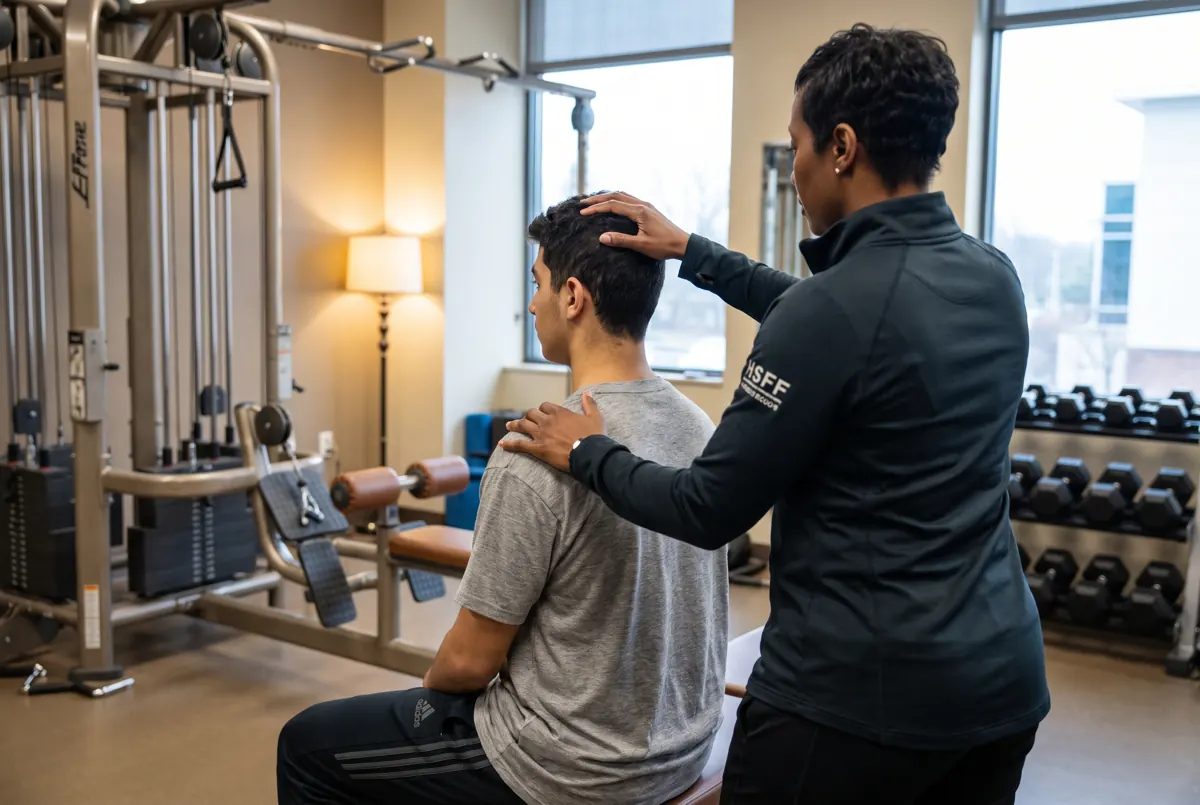
Recovery after a motor vehicle accident starts with a thorough evaluation of exactly which tissues were affected, whether that's the neck, back, shoulders, or a combination. We use manual therapy to reduce muscle guarding and restore normal joint motion, then rebuild strength and stability so the area is protected against re-injury. Documentation matters after an accident, and we track your progress clearly from your first visit, which is often useful for your claim as well as your recovery. The goal is to resolve the injury completely, not manage symptoms indefinitely.
What to expect from your recovery.
Evaluation
We assess your neck, back, and any other affected areas, checking motion, strength, and where the pain actually originates. You leave with a clear picture of what was injured and what recovery looks like.
Reducing pain and restoring motion
We use manual therapy to calm muscle guarding and restore normal movement in the neck, back, and shoulders, easing pain and stiffness from the inside out rather than just resting and hoping it fades.
Rebuilding strength and stability
As pain resolves, we rebuild the strength and control that protect against re-injury and lingering stiffness, so you return to normal activity with a spine and shoulders that are fully recovered, not just quiet for now.
Caring, attentive staff, and were able to get me in same-day when I had an acute issue and I felt better immediately after. Amazed at how much progress I made in the following days, after days of no progress on my own.
Pain rarely travels alone.
Neck Pain
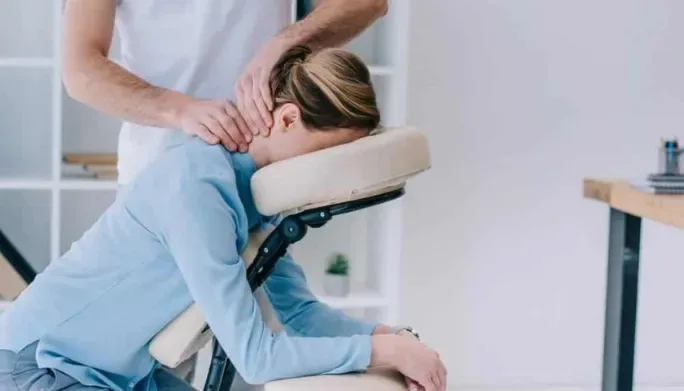
Whiplash almost always involves the neck. We treat the underlying cervical strain, not just the surface soreness.
Headaches
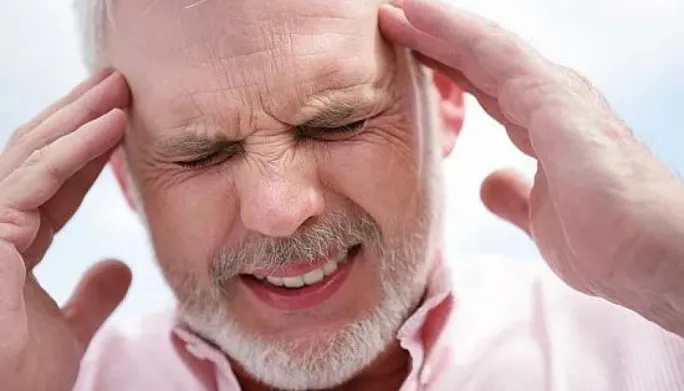
Post-accident headaches usually trace back to the neck. Treating both together stops the cycle from repeating.
Back Pain & Sciatica
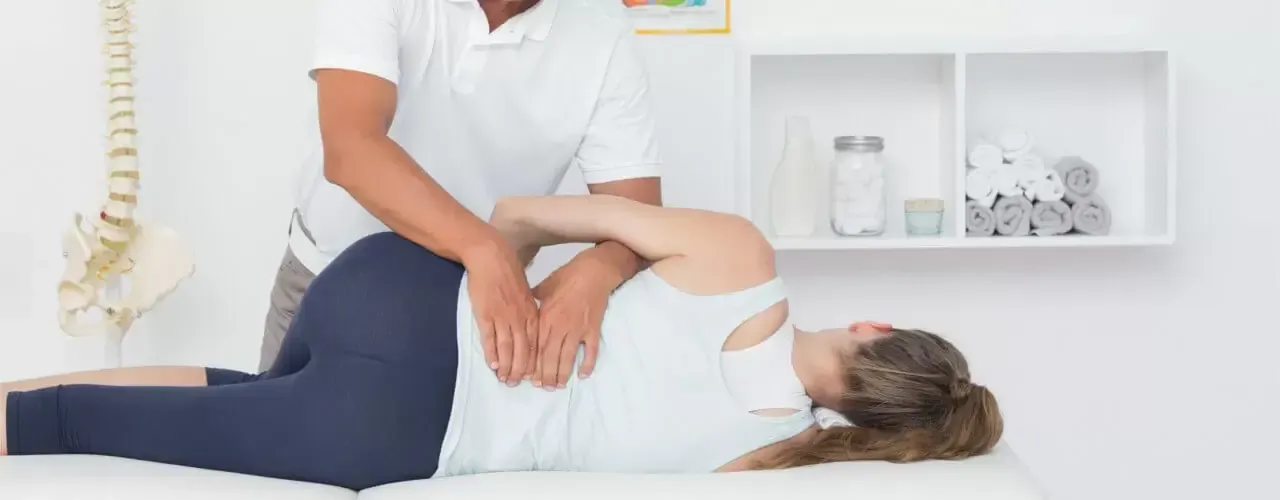
Impact injuries frequently strain the low back as well as the neck. We evaluate the whole spine after an accident.
Ready when you are.
Saturday - Sunday: Closed