Parkinson's Movement Therapy in Portland
Parkinson's changes how the body initiates and controls movement, but it doesn't have to dictate how small your world becomes. Movement-based physical therapy helps you move bigger, walk steadier, and stay independent longer.
What causes movement and balance changes in Parkinson's?
Parkinson's disease affects the brain's ability to plan and scale movement, which is why steps shrink, arm swing disappears, and balance reactions slow down. Physical therapy can't change the underlying neurological process, but it can retrain the body to move bigger, move safer, and hold onto function for longer.

One of the hallmark effects of Parkinson's is that movements gradually get smaller without the person noticing, smaller steps, quieter speech, smaller handwriting. The brain still intends a normal-sized movement, but the signal that reaches the muscles shrinks. Movement-based training that emphasizes big, deliberate motion helps recalibrate that signal.
Balance depends on fast automatic corrections when you shift weight or get bumped. Parkinson's slows those reactions down, which is a major reason falls become more common. Targeted balance training builds faster, more reliable protective responses.
Increased muscle tone, or rigidity, makes movements feel stiff and effortful, and over time it can limit how far a joint moves. Regular mobility work and stretching keeps the body from losing range of motion on top of the disease's other effects.
Some people with Parkinson's experience sudden episodes where their feet feel stuck to the floor, especially in doorways or tight spaces. Specific cueing strategies, like stepping over a line or counting a rhythm, can reduce how often freezing happens.
As movement becomes harder, it's natural to move less, but reduced activity accelerates the loss of strength, balance, and endurance on top of the disease process itself. Staying consistently active is one of the most effective ways to preserve function over time.
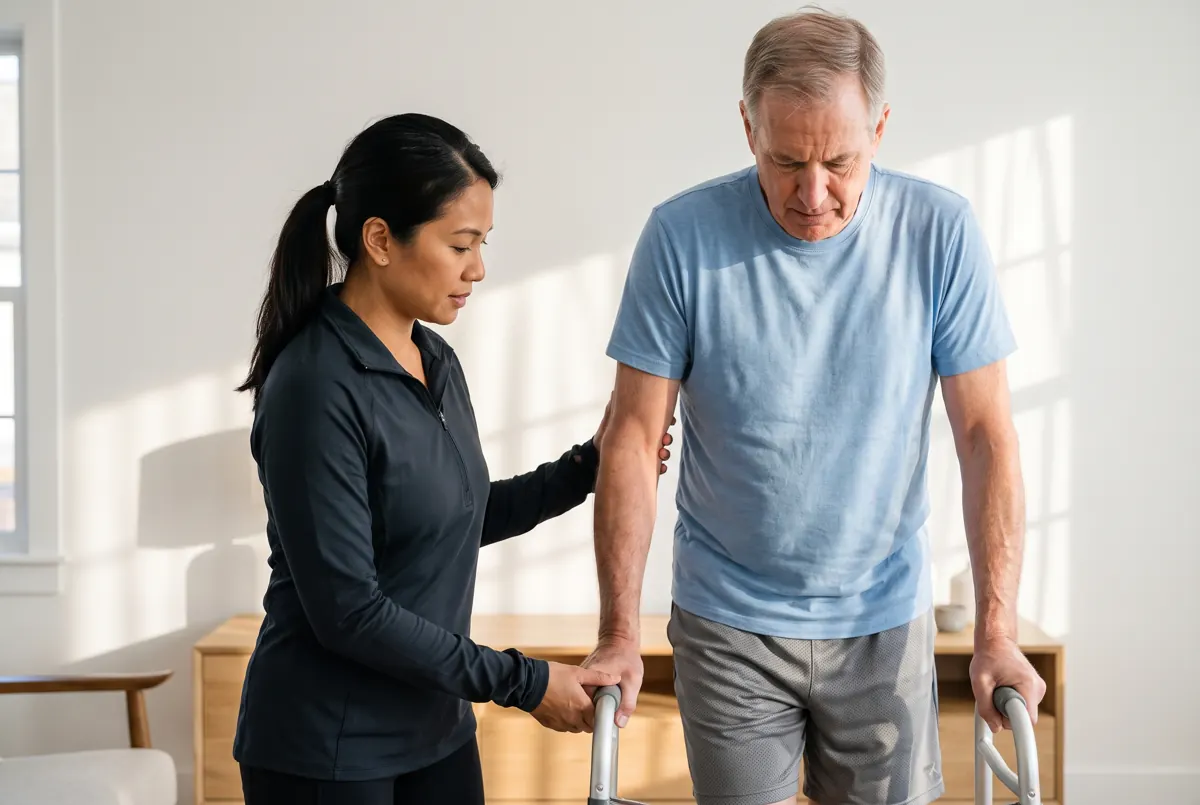
How physical therapy in Portland helps.
Our approach to Parkinson's care centers on movement-based programs that train the body to produce bigger, more deliberate motion instead of the smaller, slower patterns the disease encourages. Sessions include amplitude-focused exercise, balance and fall-prevention training, gait work, and flexibility maintenance, all adjusted to where you are today and how your symptoms present. We also work with your care partners so the strategies that help in the clinic carry over at home. The goal is to help you stay active, steady, and independent for as long as possible.
What to expect from your recovery.
Evaluation
We assess your walking pattern, balance, strength, and movement amplitude, and talk with you about the daily activities that matter most. You leave with a clear picture of where to focus first.
Movement and balance retraining
We use amplitude-focused exercise and balance training to help your body move bigger and react faster, directly targeting the patterns Parkinson's tends to shrink.
Building a sustainable routine
We build a program you can maintain long-term, with strategies for freezing episodes, home exercise, and ongoing check-ins to adjust the plan as your needs change.
Great team and great care! I've had the privilege of working with Claire for the past few months, she's been super helpful and encouraging, great as a physical therapist and as a person.
Pain rarely travels alone.
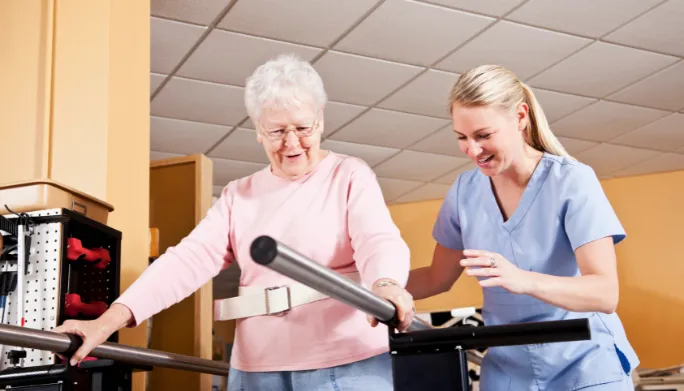
Balance & Gait Disorders
Balance and walking changes are central to Parkinson's care and respond to the same targeted, progressive training.
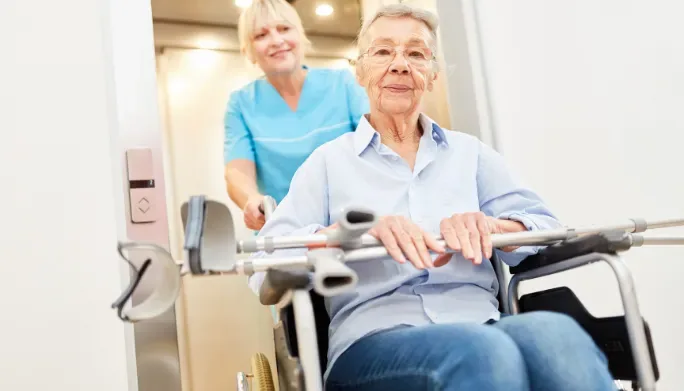
Stroke
Parkinson's and stroke both affect movement control through the nervous system, and both benefit from repetitive, targeted rehab.

Dizziness & Vertigo
Balance concerns often overlap with dizziness. We evaluate the full picture to understand what's driving your unsteadiness.
Ready when you are.
Saturday - Sunday: Closed